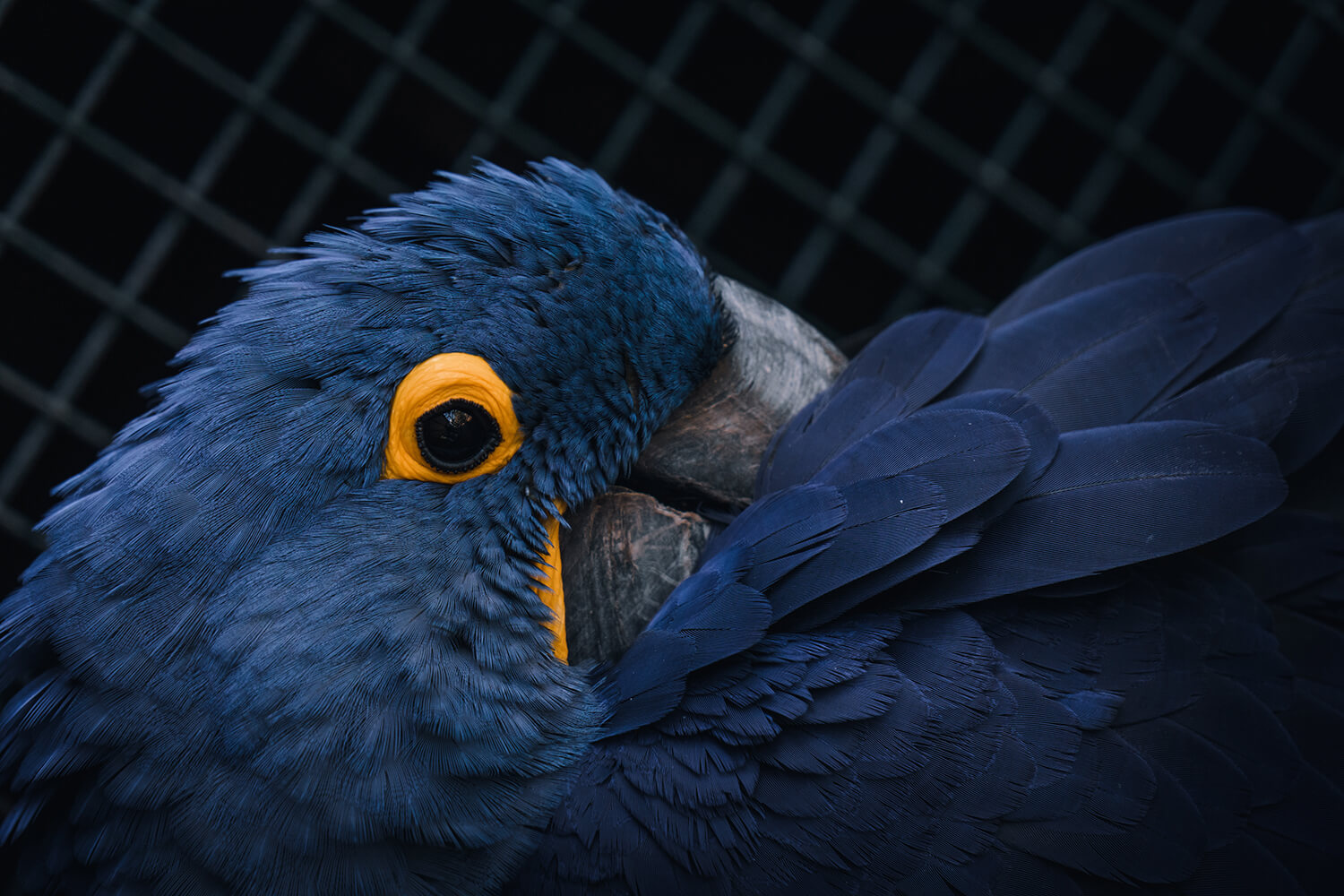
Blue-throated Macaw Art Fest: The Day Beni Wove a Shield of Hope for Its Emblematic Bird
René Mijail Ibañez
Coordinador Conservación de Loros Bolivia - CLB
There are days when magic happens—days when nature calls to us, and the heart of an entire city beats as one for a single cause. What began as a dream to take the Critically Endangered Blue-throated Macaw (Ara glaucogularis) under our wings—that biological jewel exclusively adorning the skies of the Llanos de Moxos—ultimately transformed into one of the most beautiful and vibrant socio-environmental and cultural mobilizations in Trinidad’s recent history. Picture the fairgrounds absolutely overflowing with life, welcoming caravans of buses filled with the smiles of students and delegations traveling from the provinces. It marked such an unprecedented milestone that even the Rector of the Autonomous University of Beni attended to inaugurate this grand celebration of conservation.
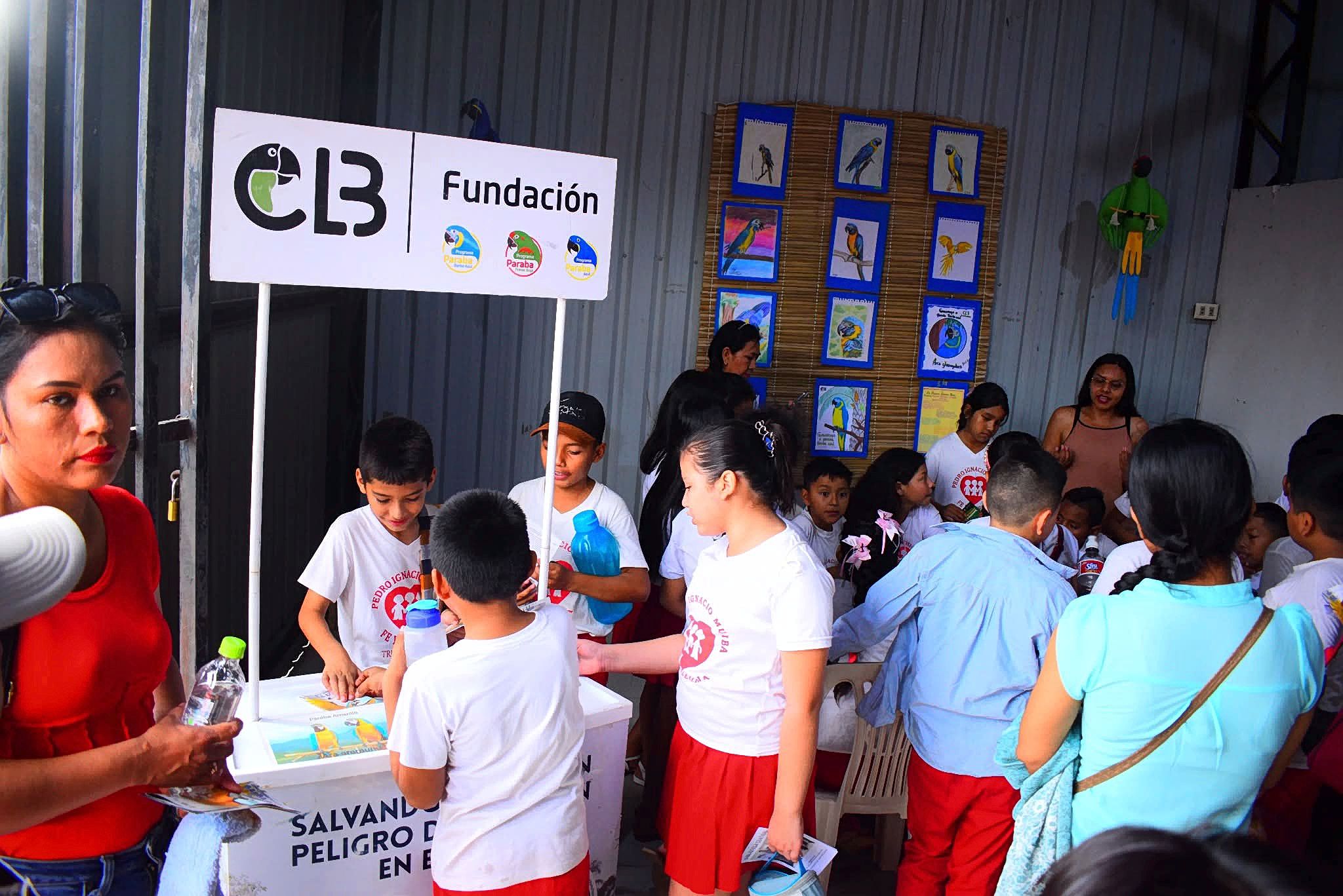
But this miracle didn’t bloom overnight; the true magic behind this massive turnout was woven through months of sowing hope. Driven by a visionary alliance between the CLB Foundation, the Directorate of Extension and Research (DIE), and the University Institute of Art (IUA) of the Autonomous University of Beni (UAB), we embarked on a journey across schools, high schools, institutes, and faculties. We went with a clear purpose: to touch the souls of the students. We shared intimate photographs of tiny chicks resting safely in our artificial nests, while honestly revealing the harsh reality of their threatened habitat. We wanted every young person to discover that their vocation and their talents were the noblest weapons for defending life. That seed of love and awareness, planted with such hope in every workshop, was the invisible engine that ultimately packed the fairgrounds.
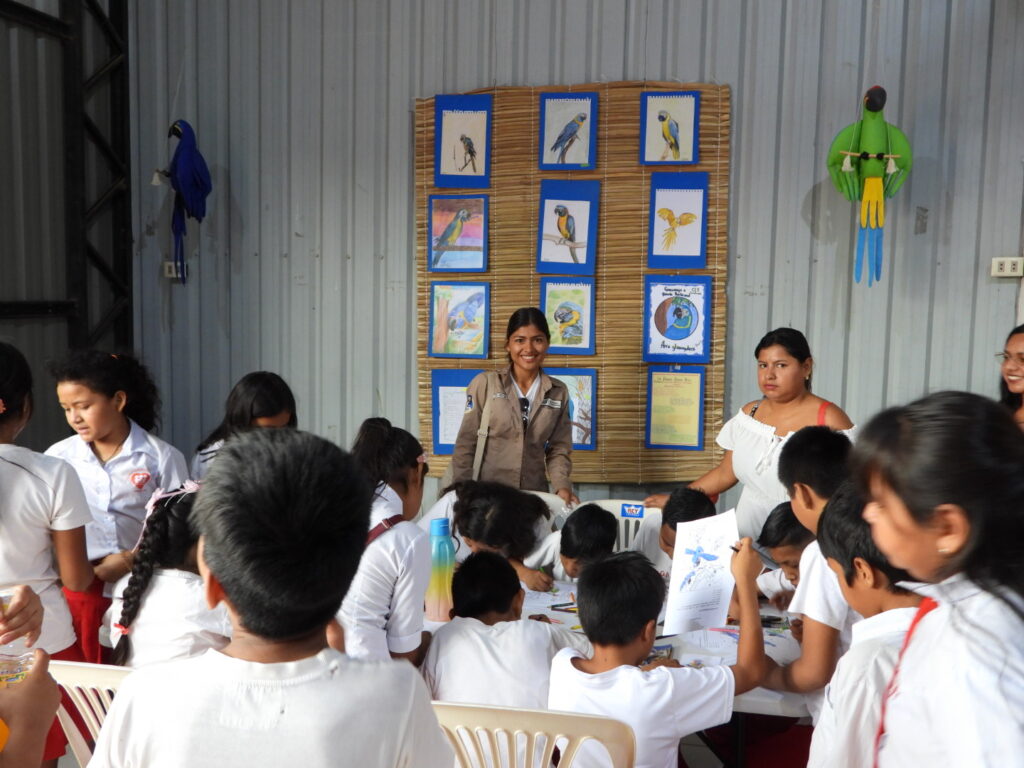
Strolling through the festival meant embarking on a fascinating journey. As hosts, the CLB Foundation set up a three-level interactive pavilion that was pure emotion. At the first stop, a charming «little school» welcomed the youngest visitors, who, with paint-stained hands, brought the Blue-throated Macaw to life under our team’s loving guidance, surrounded by a gallery of winning children’s drawings from past years. Moving up a level, you suddenly found yourself amidst the savannas: exact replicas of our nest boxes and captivating camera-trap footage hypnotized young and old alike, revealing the best-kept secrets of our wild birds. And at the very top, acting as guardians of life, our veterinary team from the «Paraba Barba Azul» Custody Center (CCFSPBA) shared the miracles of rehabilitation with tenderness and professionalism. They taught visitors how they heal little macaws rescued from the illegal pet trade, and the rigorous care given to repatriated birds that have returned to help save their species.
Suddenly, amidst the joyful hustle, the local Loreto accent invited you to pause. It was the voice from the very cradle of the macaw. Enthusiastic students from the Perfecta Viuda de Bejarano School were there, sharing environmental projects born in their homeland. They were joined by the Loreto Birdwatching Club (COAL), who proudly demonstrated how nature tourism has brought prosperity to their homes, making it crystal clear that our macaw is worth infinitely more flying free in the sky than locked in a cage. Beside them, the brave park rangers of the Gran Mojos MPA shared anecdotes from their sun-drenched patrols. Meanwhile, in a united front for law and awareness, the Beni Governorate and POFOMA officers educated the crowds, firmly reminding everyone that the true home of wildlife is the jungle, not our houses.
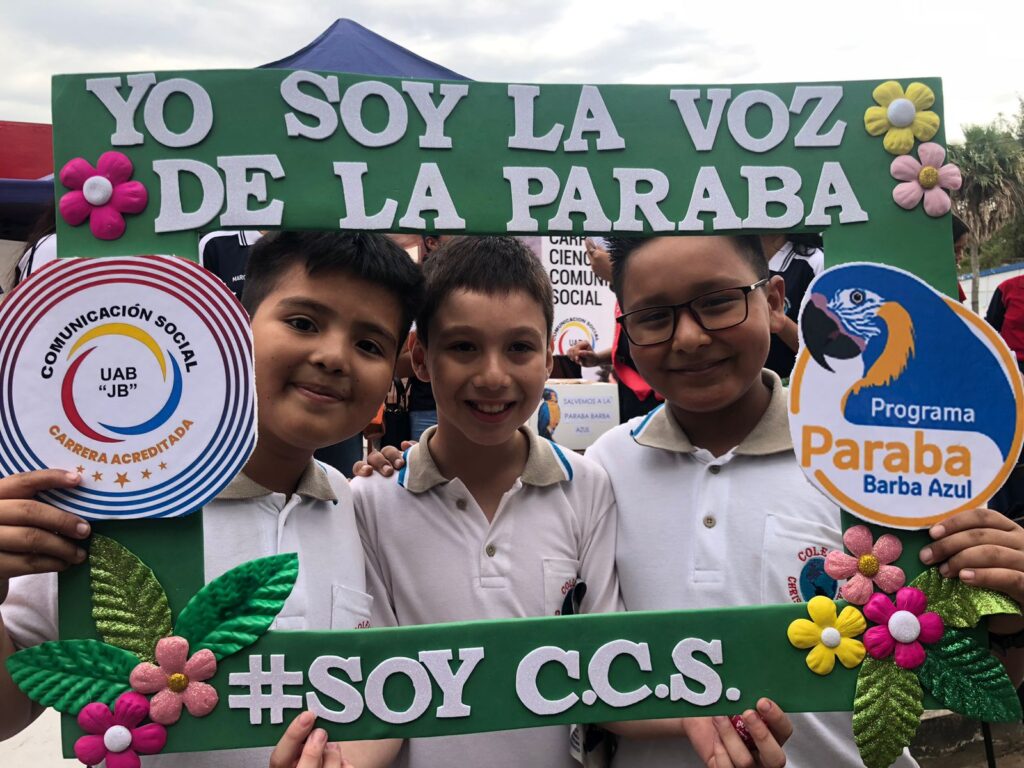
Art, of course, was the universal language of the day. The atmosphere was sweetened by violins and live music accompanying the masterful painting exhibition by the Arnaldo Ligerón Institute of Fine Arts. But the moment that truly stole everyone’s breath was the sudden entrance of the traditional Macheteros de Loreto dancers. Moving to the rhythm, they wore headdresses so majestic and realistic that the audience fell into a stunned silence—a silence that quickly erupted into a standing ovation upon discovering that those feathers were one hundred percent artificial. It was a dazzling tribute, proving that we can embrace our traditions without plucking a single feather from our wildlife.
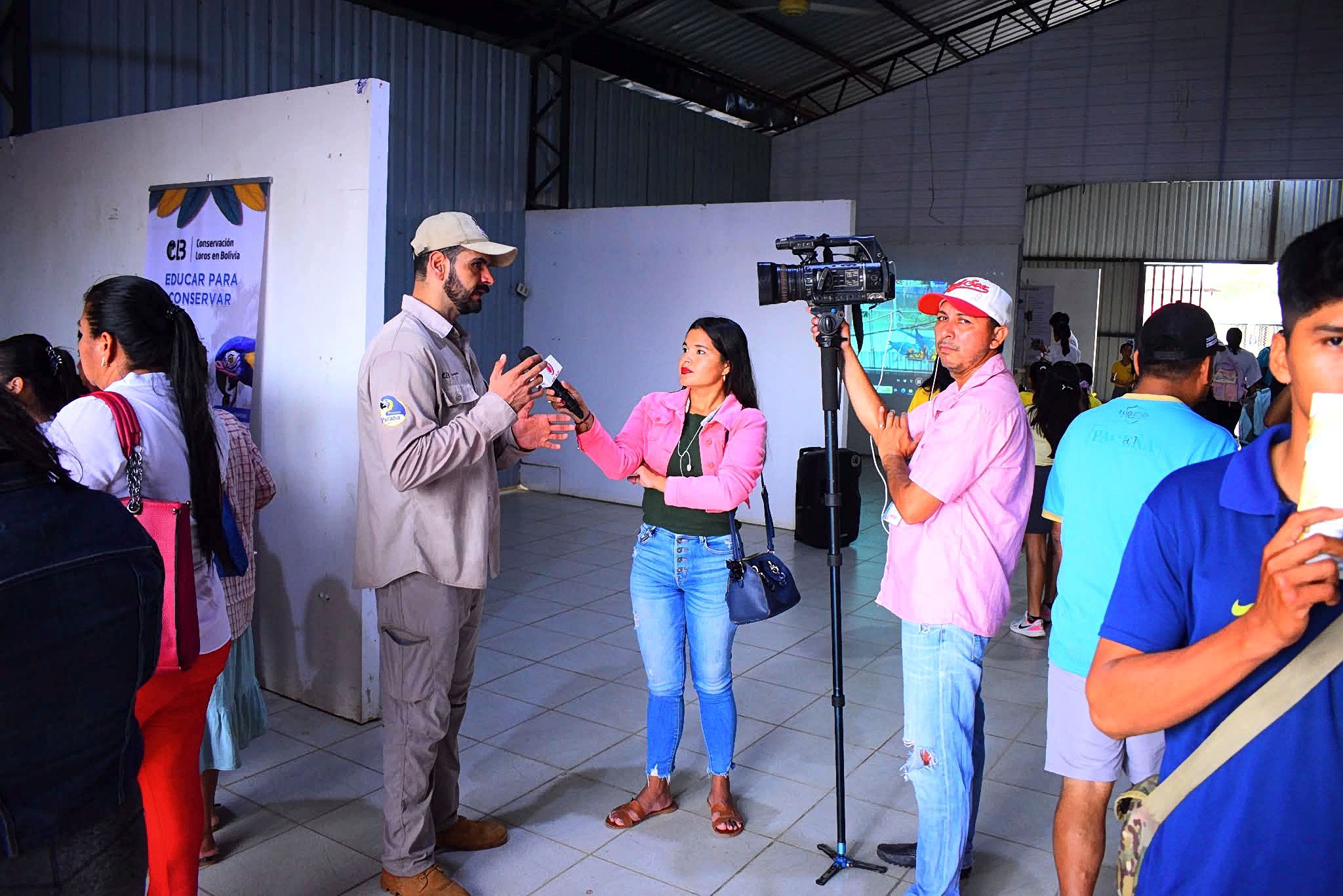
University creativity sprouted in every corner. It was fascinating to watch future journalists from the Faculty of Communication broadcasting live from a modern mobile television studio, recording a podcast that carried the macaw’s call directly to social media. Just steps away, curiosity was sparked by the CIRA’s traveling museum and the rich ecology and environment collections of the UAB Central Library, while youths from the Education and Physical Education departments spread their infectious energy by leading outdoor games and live canvas painting.
This entire celebration of life also embraced those who nourish our land and our economy. The Peasant Market amazed us with its ecological crafts, showcasing the beauty of sustainability. Meanwhile, the restaurant El Tábano invited us to rethink our food choices; as the only official venue of the national sustainable use program, they taught us that good practices also save the savannas. Eco-friendly tourism shone through initiatives like the Reina de Enín riverboat, and Banco Prodem built bridges to the future by seeking out projects for their corporate social responsibility programs. All this happened while the Beni Birdwatching Club added new dreamers to its ranks, and the tireless EMAUT ensured that, amidst all the celebration, cleanliness and recycling were the guests of honor.
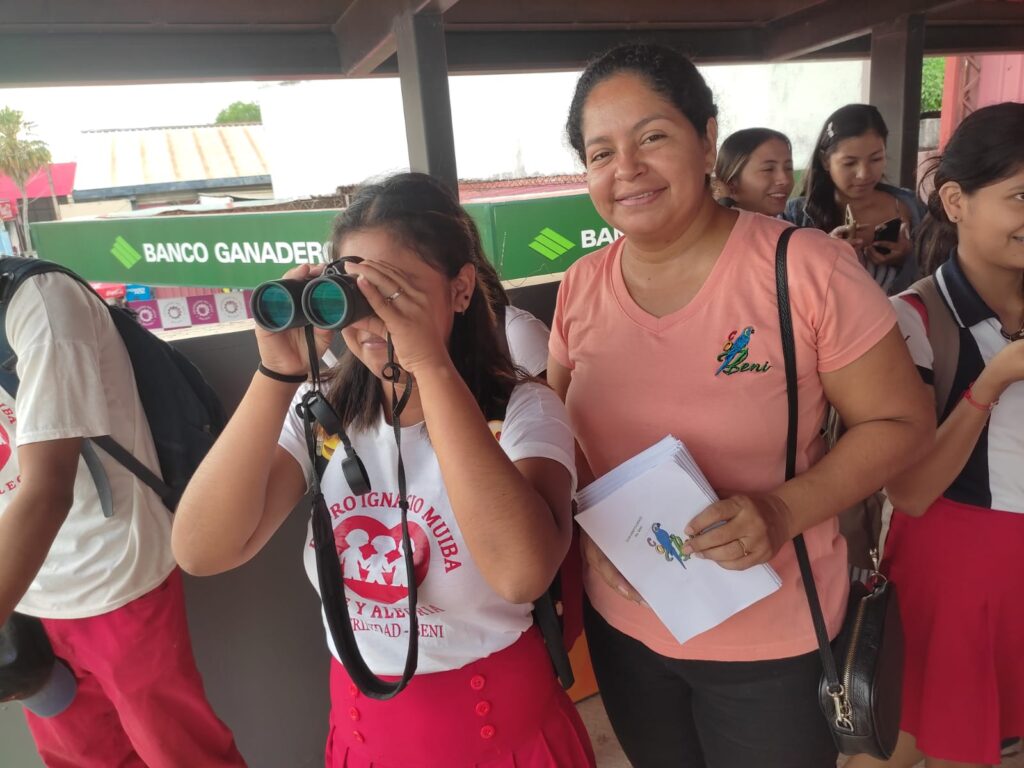
And yet, describing every single hero and participant of this day would be a nearly impossible task, because the immense Fexpo Beni venue was, quite literally, overflowing with life, light, and color. There were countless other participants—art institutes displaying their immense talent, additional public entities, and organizations that set up their own booths with a soul-catching enthusiasm. Walking through those immense, packed aisles was like losing oneself in an endless sea of citizen voices, where every corner, every poster, and every glance breathed ecology, environmental care, and a genuine love for our land.
As evening fell, the Barba Azul Art Fest gifted us with a beautiful, resounding certainty: the conservation of our Blue-throated Macaw is no longer the solitary struggle of a few romantics. Today, it is a deep heartbeat in the very chest of all of Beni. When children, artists, university students, bankers, authorities, peasants, and indigenous communities hold hands, there is no threat that can defeat them. Together, we have painted a joyful, impenetrable human shield so that our natural heritage may fly free, today and forever.